
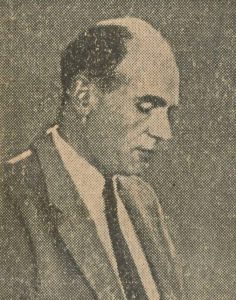
 André Hunebelle (1896–1985) is best known today for his Art Deco glass. But the designer who created elegant, geometric vases and bowls went on to become a successful French film director, responsible for popular adventures, comedies and most famously the cult Fantômas films of the 1960s.
Hunebelle initially studied mathematics at France’s elite École Polytechnique before turning to decoration and glass design.
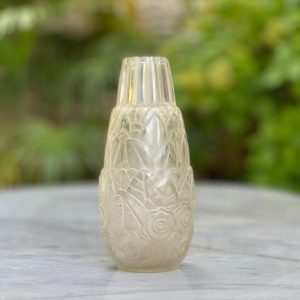
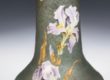
In 1927, he presented his first glassware collection. His designs reflected the spirit of the Art Deco period: clean lines, stylised natural forms and a fascination with geometry.
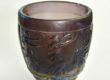
He made particularly effective use of moulded glass, contrasting smooth, polished surfaces with satin-frosted areas to create patterns that caught and diffused the light.
This was design for a modern age. Advances in industrial glassmaking and mould production made it possible to reproduce intricate forms with considerable precision, bringing carefully designed objects within reach of a wider public.
Hunebelle’s work combined this industrial potential with a strong individual style.
All good things come to an end, and his glass business closed in 1938. After a spell in newspaper publishing, he threw himself into the film industry in the 1940s, first as a producer and then as a director. His later films, including the scary spoof Fantômas series – starring comedy giant Louis de Funes and matinée idol Jean Marais – belonged to a very different world from his refined glassware.
It’s tempting to see these as two separate lives but, for me, they seem like two different expressions of the same restless curiosity.
Hunebelle was a designer and entrepreneur who moved with the times, from the art of shaping light in glass to the art of creating images on screen.
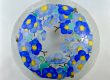
One little reminder of Hunebelle’s first career is the Flore bud vase, designed with Roger Cognéville around 1930.
Its crisp, stylised floral relief and contrasting satin and polished surfaces demonstrate the precision and visual imagination that made his glass designs so distinctive.
Small enough to cup in your hand, it’s a delightful piece of Art Deco design that tells its own story about the period, and reminds us of a man very much of his time.